The Living Legacy of Taiji: What Elder Masters Teach Us About Healthy Ageing
How decades of dedicated Qigong and Taiji practice preserve vitality, balance, cognitive function and inner serenity—where ancient wisdom meets modern scientific understanding.
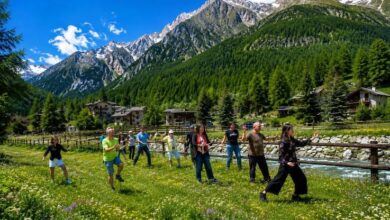
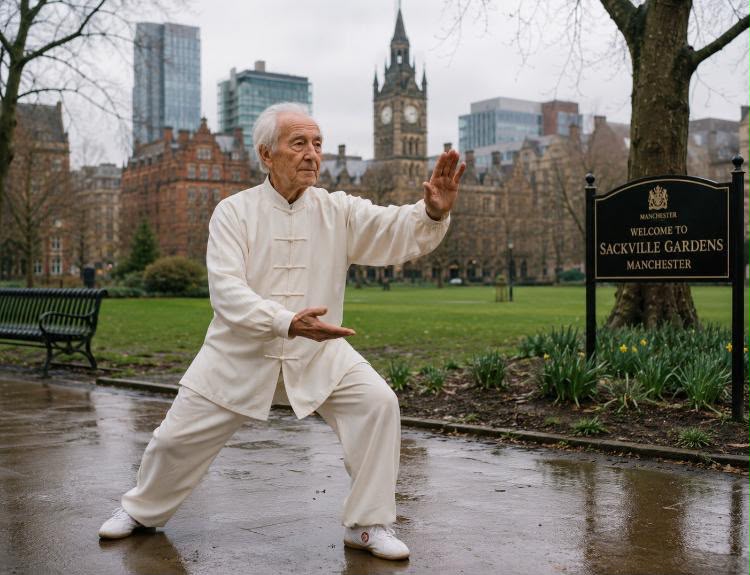
Masters of advanced age who continue to practise Taiji with extraordinary energy, balance, mental clarity and inner serenity represent one of the most authentic and compelling testimonies to the value of a lifetime devoted to Qigong and Taiji. Their presence provides concrete evidence of how consistent, mindful and long-term practice can accompany the natural ageing process while preserving vitality, mobility, coordination, emotional stability and mental clarity.
Observing their movements is to witness the expression of a body that, although marked by the passage of time, retains elasticity, precision, fluidity and harmony. Every gesture reveals a profound integration of breathing, intention, posture and movement, reflecting the principles of energetic balance that form the foundation of Traditional Chinese Medicine. In them, Qi is not merely a theoretical concept; rather, it is expressed tangibly through the quality of their movements, the stability of their balance, the natural rhythm of their breathing, the brightness of their gaze and the serenity of their demeanour.
Modern scientific knowledge now enables us to better understand many of the benefits that have been observed for centuries through the practice of Taiji and Qigong. Numerous studies have shown that these disciplines can help improve postural balance, proprioception, neuromuscular coordination, cardiovascular and respiratory function, autonomic nervous system regulation, and the ability to manage stress. Furthermore, regular practice contributes to maintaining joint mobility, muscular strength, cognitive function and overall quality of life—factors that are of fundamental importance in promoting healthy and active ageing.
For this reason, elderly Taiji Masters are not merely outstanding practitioners with exceptional technical skill and profound expertise in the arts of Taiji and Qigong. They embody a true culture of health, in which discipline, perseverance, inner balance and harmony with nature are translated into a quality of life that is immediately evident to anyone who observes them. Their lives demonstrate that well-being is not the result of occasional interventions, but rather the fruit of daily, patient and persistent practice capable of supporting the individual throughout every stage of life.
Their role therefore extends far beyond the fields of martial arts or therapeutic practice; they represent a human, cultural and scientific heritage of extraordinary value. They are living custodians of a millennia-old body of knowledge that continues to demonstrate its relevance today, offering future generations not only an inspiring model of longevity and health, but also a profound reflection on the importance of maintaining harmony between body, mind and spirit. In an era characterised by increasingly fast-paced lifestyles and growing levels of stress, their vitality stands as a powerful message of hope and an invitation to rediscover the value of prevention, self-awareness and the daily cultivation of health through the timeless arts of Qigong and Taiji.
Maestri di età avanzata che continuano a praticare il Taiji con straordinaria energia, equilibrio, lucidità mentale e serenità interiore rappresentano una delle testimonianze più autentiche e convincenti del valore di una vita dedicata al Qigong e al Taiji. La loro presenza costituisce una dimostrazione concreta di come una pratica costante, consapevole e protratta nel tempo possa accompagnare il naturale processo di invecchiamento, preservando vitalità, mobilità, coordinazione, stabilità emotiva e chiarezza mentale.
Osservare il loro movimento significa assistere all’espressione di un corpo che, pur segnato dal trascorrere degli anni, conserva elasticità, precisione, fluidità e armonia. Ogni gesto rivela una profonda integrazione tra respirazione, intenzione, postura e movimento, riflettendo quei principi di equilibrio energetico che costituiscono il fondamento della Medicina Tradizionale Cinese. In essi il Qi non rappresenta soltanto un concetto teorico, ma si manifesta concretamente nella qualità del movimento, nella stabilità dell’equilibrio, nella naturalezza della respirazione, nella luminosità dello sguardo e nella serenità dell’atteggiamento.
Le moderne conoscenze scientifiche consentono oggi di comprendere meglio molti dei benefici osservati da secoli nella pratica del Taiji e del Qigong. Numerosi studi hanno evidenziato come questi esercizi possano favorire il miglioramento dell’equilibrio posturale, della propriocezione, della coordinazione neuromuscolare, della funzionalità cardiovascolare e respiratoria, della regolazione del sistema nervoso autonomo e della capacità di gestire lo stress. Inoltre, una pratica regolare contribuisce al mantenimento della mobilità articolare, della forza muscolare, delle funzioni cognitive e della qualità della vita, aspetti di fondamentale importanza nel promuovere un invecchiamento attivo e in salute.
Per questo motivo, i grandi Maestri anziani non rappresentano soltanto un esempio di eccellenza tecnica o di elevata competenza nelle arti del Taiji e del Qigong. Essi incarnano una vera e propria cultura della salute, nella quale disciplina, costanza, equilibrio interiore e armonia con la natura si traducono in una qualità della vita che appare evidente a chiunque li osservi. La loro esistenza testimonia che il benessere non è il risultato di interventi occasionali, ma il frutto di una pratica quotidiana, paziente e perseverante, capace di accompagnare la persona lungo tutto l’arco della vita.
La loro figura assume così un valore che va ben oltre l’ambito della pratica marziale o terapeutica: diventa un patrimonio umano, culturale e scientifico di straordinaria importanza. Essi sono custodi viventi di un sapere millenario che continua a dimostrare la propria attualità, offrendo alle nuove generazioni non soltanto un modello di longevità e salute, ma anche una profonda riflessione sul significato dell’equilibrio tra corpo, mente e spirito. In un’epoca caratterizzata da ritmi frenetici e crescente stress, la loro vitalità rappresenta un messaggio di speranza e un invito a riscoprire il valore della prevenzione, della consapevolezza e della coltivazione quotidiana della salute attraverso le antiche arti del Qigong e del Taiji.
_ Jade Springstone