Journalist Dr. Magdi Kamel ElHawary Writes : The U.S. War Against Iran Could Expand and Last for Months – Is the Region Prepared for Such a Scenario?

Journalist Dr. Magdi Kamel ElHawary Writes : The U.S. War Against Iran Could Expand and Last for Months – Is the Region Prepared for Such a Scenario?
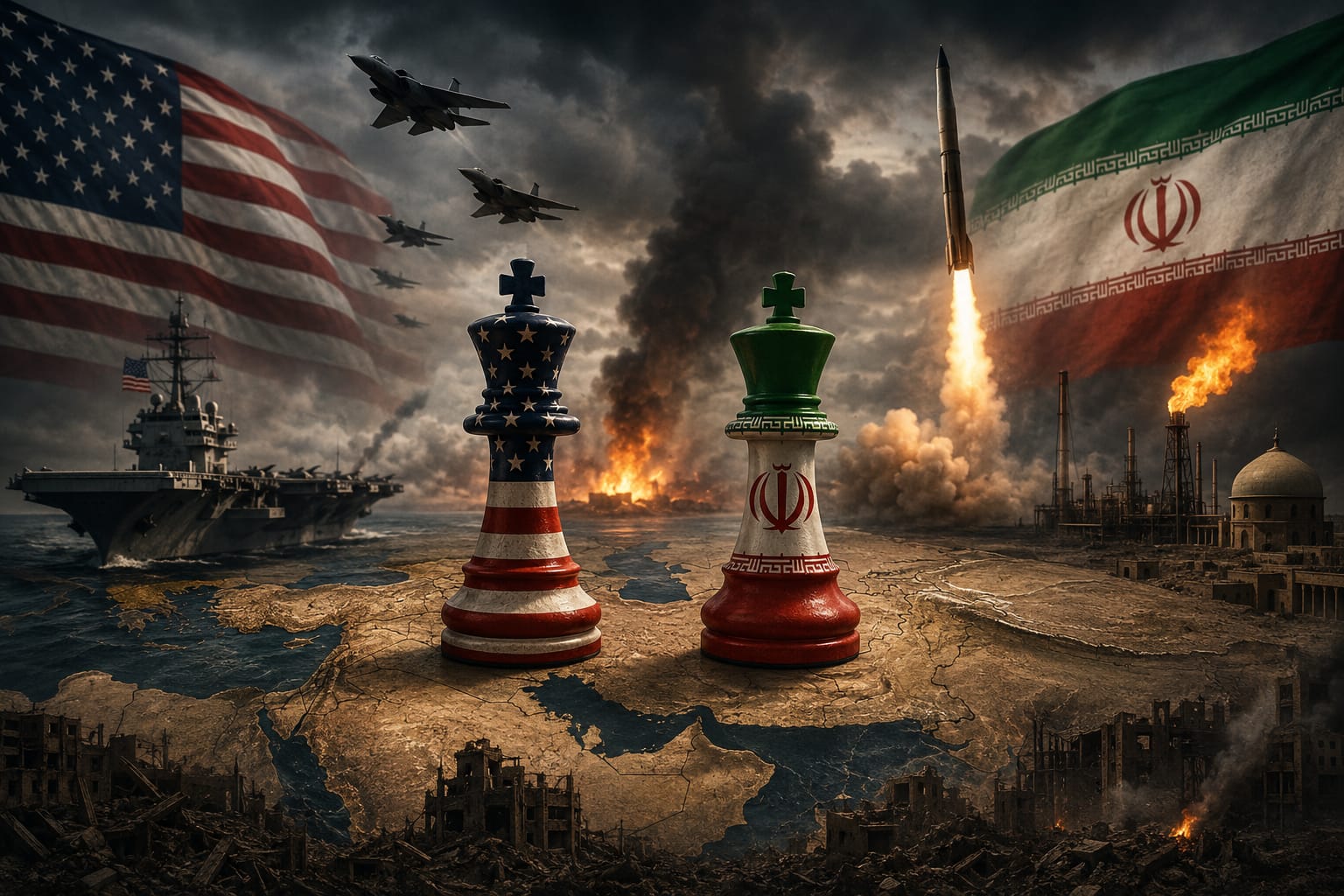
As tensions continue to escalate between the United States and Iran, the Middle East appears to be standing at the threshold of a new and potentially more dangerous phase. What was once limited to political rhetoric and isolated military exchanges now carries clear signs of a conflict that could drag on for months, reshaping regional alliances and altering the balance of power.
Although both Washington and Tehran repeatedly state that they seek to avoid a full-scale war, developments on the ground suggest otherwise. A single strategic miscalculation or a major military operation could ignite a confrontation that would be extremely difficult to contain. Iran possesses an extensive network of regional allies, while the United States maintains significant military bases across the Gulf, Iraq, and Syria, making the possibility of a broader conflict increasingly realistic.
The greatest danger lies not only in direct military confrontation but also in its far-reaching economic and political consequences. Any disruption to maritime navigation through the Strait of Hormuz or attacks on energy infrastructure could trigger a dramatic surge in global oil and gas prices, placing additional pressure on an already fragile world economy.
Regional governments would face the difficult challenge of safeguarding their national security while preserving domestic stability amid mounting political, economic, and security pressures. Ordinary citizens would inevitably bear the consequences through rising living costs, disrupted trade, weakened investment, and growing uncertainty.
Despite the escalating tensions, diplomacy remains the last viable path to preventing a prolonged and devastating conflict. History has repeatedly demonstrated that wars may begin with a single decision, but they often end at a far greater cost than any side initially anticipated.
Today, the Middle East needs political solutions far more than another military confrontation. Every additional day of escalation increases the likelihood of a wider regional conflict and pushes the region toward an uncertain future.
The pressing question remains:
If the confrontation between the United States and Iran evolves into a prolonged war lasting for months, do the countries of the Middle East possess the economic, military, and political resilience to withstand its consequences, or are we about to witness the birth of a new Middle East shaped by the fires of war?