De Gasperi: An Example for Europe’s Future
by Gianni Lattanzio
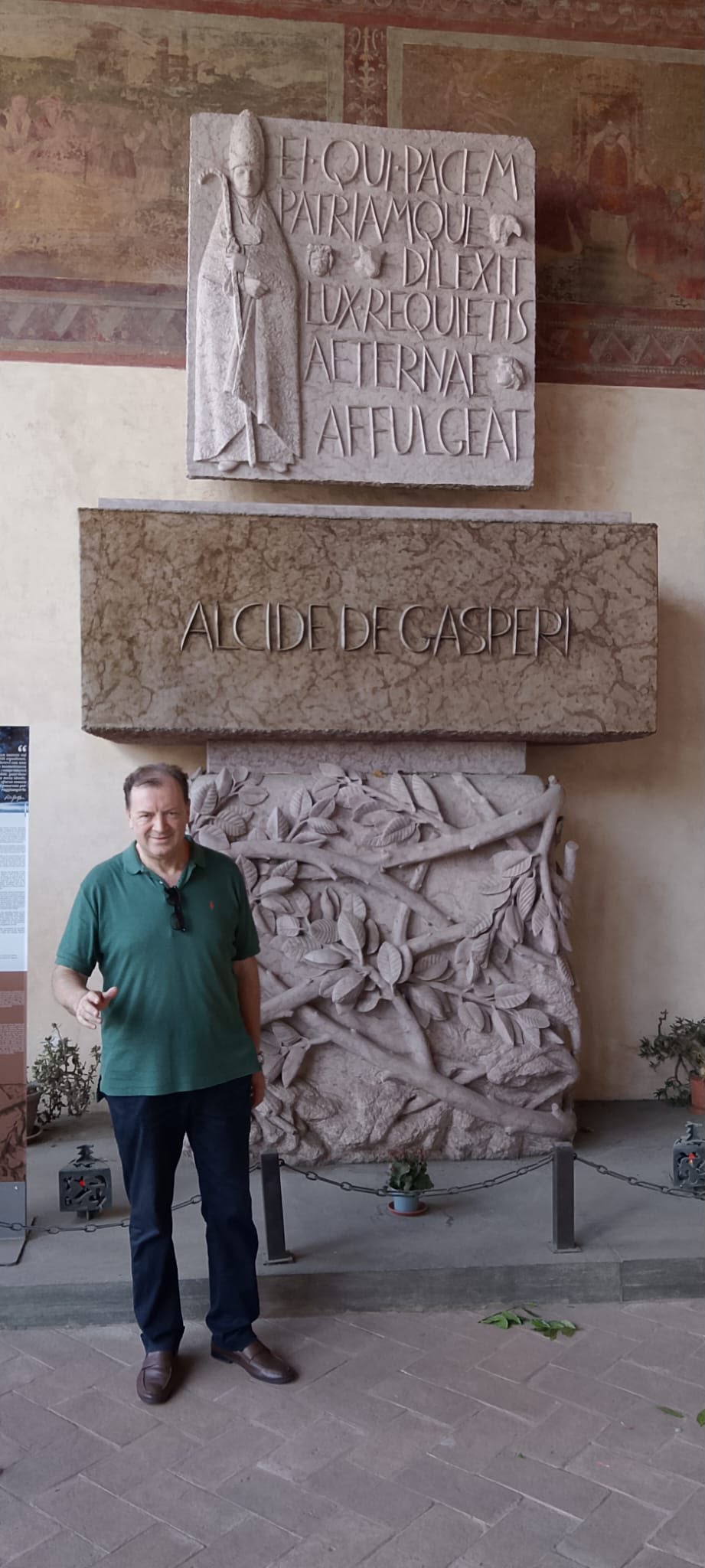
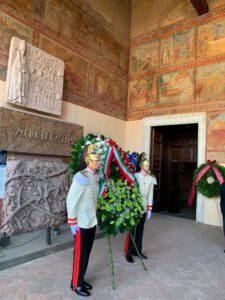
Today, on the seventy-second anniversary of Alcide De Gasperi’s death, Europe remembers not merely one of its founding fathers, but a statesman whose political vision speaks with unusual force to the anxieties of our age.
De Gasperi understood that a nation’s dignity cannot be separated from the democratic quality of its institutions. For him, patriotism was never resentment, nor the pursuit of power for its own sake. Italy could regain its place in the world only through constitutional freedom, a decisive break with Fascism, and a sense of responsibility towards the wider international community.
His legacy is therefore inseparable from an ethic of responsibility. De Gasperi knew that political leadership is not the art of repeating noble principles without confronting reality; nor is it the cynical management of power. It is the difficult discipline of judging consequences: defending security without sacrificing liberty, pursuing national interests without abandoning solidarity, building alliances without accepting subservience.
This was the spirit in which he guided Italy through the ruins of war and the tensions of the Cold War. He understood the importance of the United States for Italy’s reconstruction and security, and he supported the country’s Western and Atlantic orientation. Yet he never confused alliance with obedience. When external pressures risked undermining constitutional pluralism, he held firm: a democracy cannot preserve itself by stepping outside the rule of law.
For De Gasperi, Europe was the political answer to the tragic failure of absolute national sovereignty. European unity did not mean erasing nations; it meant freeing them from the destructive cycle of rivalry, fear and war. Together with Robert Schuman and Konrad Adenauer, he envisioned a Europe founded on law, institutions, reconciliation and shared responsibility—a Europe capable of turning former instruments of conflict into foundations for peace.
That vision is urgently relevant today. Europe faces war, strategic competition, technological dependence, climate disruption, migration pressures and an international order in visible crisis. No European country, not even the largest, can confront these challenges alone. In the twenty-first century, sovereignty increasingly means the capacity to act together.
Italy’s national interest therefore lies in a European Union that is stronger, more cohesive and more capable of political action: an Union able to defend democracy and the rule of law, invest in innovation and social cohesion, secure its strategic interests and contribute responsibly to stability in the Mediterranean, in Africa and across the international system.
Seventy-two years after his death, De Gasperi remains an example for Europe’s future because he reminds us that politics is not the amplification of fear, nor the performance of national pride. It is the courage to build institutions, to uphold freedom under pressure, and to transform interdependence into a common destiny.