NRIAG witnesses the opening of the Egyptian-British Center for Artificial Intelligence and Virtual Heritage…
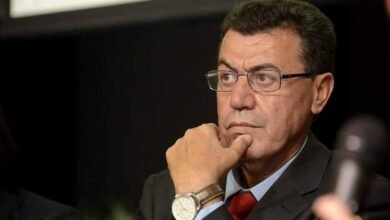
█ Italian archaeologist Armando Mei : Emerging technologies are capable of contributing to the study, documentation, monitoring, and preservation of cultural heritage...


Cairo – Amr AbduLRahman – Exclusive to [CISC News]

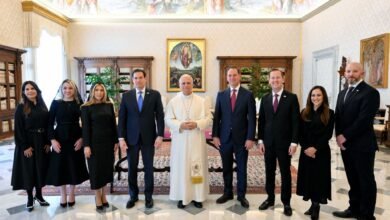
Italian archaeologist Armando Mei expressed his delight at the official invitation he and his wife, Veronica Antili Milantoni, received to attend the official opening of the British-Egyptian Centre for Artificial Intelligence and Virtual Heritage (BECAIVE), hosted by the National Research Institute of Astronomy and Geophysics (NRIAG) in Helwan, Cairo. The center aims to explore future visions for research into Egypt’s rich cultural heritage.
He also extended his gratitude to the National Research Institute of Astronomy and Geophysics, the BECAIVE Center, and everyone who contributed to organizing this important initiative.
The opening marked the launch of Training Workshop 1.0 – “Mapping the Innovation and Impact of Artificial Intelligence: Researching and Documenting Ancient Egyptian Heritage”, an initiative dedicated to one of the most significant challenges facing archaeological research today: how emerging technologies can contribute to the study, documentation, monitoring and preservation of cultural heritage.
.
█ Armando Mei commented, after the opening , saying:

Artificial Intelligence should not be seen as a substitute for archaeological research or scientific interpretation. Its real potential lies in its ability to support and expand them: integrating different datasets, identifying patterns and correlations, assisting the analysis of complex information, improving documentation processes, and contributing to increasingly sophisticated models for the investigation and preservation of archaeological sites. For archaeology, this is particularly important.
The future of research will increasingly depend upon the ability to bring together disciplines that have traditionally operated separately: archaeology, geophysics, qua tum sensing, digital documentation, artificial intelligence and advanced sensing technologies.
When these tools are integrated within a rigorous scientific methodology, technology becomes something more than an instrument of visualization. It becomes a means of asking new questions of the archaeological record — and, potentially, of seeing what conventional approaches alone cannot reveal.
The future of archaeology will not be defined by technology alone, but by our ability to integrate technology, scientific evidence and archaeological knowledge into a common research vision.
.
█ Armando Mei is an archaeologist and cultural heritage project coordinator based in Cairo, and the founder and research director of the Egyptian Heritage Research Foundation. His work and studies focus on ancient Egyptian antiquities using non-invasive research techniques, and he serves as a global ambassador for pyramid science at the International Center for Pyramid Science and Ethics in Science (ICPSES).