Ceuta, Gibraltar and the Battle for the Sea
by Gianni Lattanzio
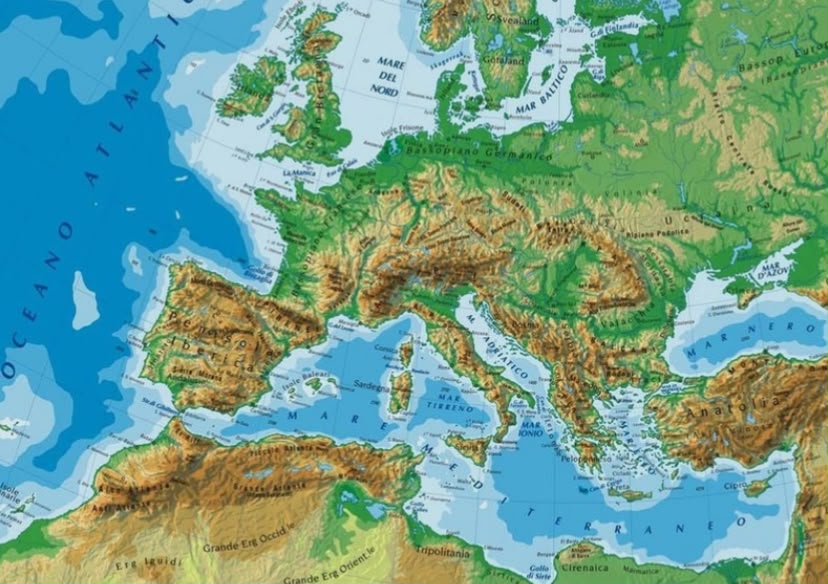
The Strait of Gibraltar is only a narrow stretch of water. Yet it connects the Atlantic to the Mediterranean, Europe to Africa, and global trade to one of the world’s most fragile regions.
Every day, ships carrying energy, food, containers and industrial goods pass through it. Gibraltar is not simply a British rock at the edge of Spain. Ceuta is not simply a Spanish city on African soil. Together, they stand at the centre of a strategic area where sovereignty, migration, trade and security meet.
International law is clear. Under the UN Convention on the Law of the Sea, international straits must remain open to continuous and rapid transit. Coastal states have rights over security and environmental protection, but they cannot turn major sea routes into political tools or close them at will.
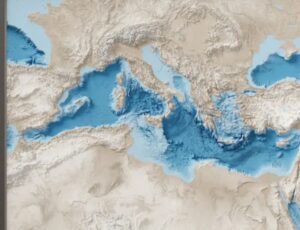
Yet this principle is under growing pressure. In the Red Sea, attacks on commercial vessels have disrupted the route through Bab el-Mandeb and the Suez Canal, forcing ships to sail around Africa. In the Strait of Hormuz, tensions threaten global energy supplies. In the Black Sea, war has made grain exports and civilian shipping part of the conflict. Around the world, the sea is becoming a battlefield again.
Gibraltar has also been reshaped by Brexit. Sovereignty has not changed: Gibraltar remains British, while Spain continues to claim it. But Brexit exposed a basic truth: Gibraltar cannot survive economically without cooperation with Spain and the European continent. The 2026 agreement between the UK and the EU avoided a hard border and created a new framework for mobility and border controls, while leaving the sovereignty dispute unresolved.
Ceuta raises an even more sensitive question. Spain considers it an integral part of its territory; Morocco sees it as an unfinished historical issue. Ceuta does not control the Strait by itself, and a transfer of sovereignty would not give Morocco the legal power to close Gibraltar. The right of transit would remain protected by international law.
But politics would change. Morocco would strengthen its position on the southern shore of the Strait. It would gain greater influence over maritime security, migration routes, trade relations and negotiations with Spain and the European Union. The law of the sea would remain the same, but the balance of power around it would shift.
This matters for trade as well. Ceuta is not a global port like Tanger Med, the Moroccan hub that is increasingly competing with Spain’s Algeciras. But it is part of the economic geography of the Strait. Its special tax status, cross-border trade and dependence on cooperation with Morocco show that commerce in this region is never just commerce. It is also diplomacy.
Migration makes this even clearer. The Western Mediterranean route includes crossings from Morocco and Algeria towards southern Spain, the Balearic Islands, Ceuta and Melilla. In the first five months of 2026, Frontex recorded around 7,100 irregular border crossings on this route, a 46% increase compared with the previous year.[adnkronos]
The European Union needs Morocco’s cooperation to fight criminal networks and manage border pressure. It has funded border management, anti-smuggling operations and migration programmes in Morocco for years. But this dependence has a price: when Europe delegates border control to third countries, those countries gain political leverage.
The EU must therefore do more than defend its borders. It must defend international law. It must protect freedom of navigation in Gibraltar, the Red Sea and every strategic sea lane. It must also protect human dignity at its borders.
Security is necessary. Fighting traffickers is necessary. But collective expulsions and returns without individual assessment are incompatible with European law. The EU Charter prohibits collective expulsions and protects people from being returned to places where they face torture, persecution or inhuman treatment.
Ceuta and Gibraltar are not distant outposts. They are a test for Europe. The question is whether the EU will act only as a fortress, or as a political power able to combine security, law and human rights.
In the narrow waters between Europe and Africa, that choice has become impossible to avoid.